/Operator
AI Workflow Audit Template For Marketing Teams
A practical way to audit one marketing workflow before deciding whether AI should touch it, automate it, or leave it alone.
Short answer
An AI workflow audit should map ownership, inputs, review points, risk, and measurement before a marketing team decides what AI should touch.
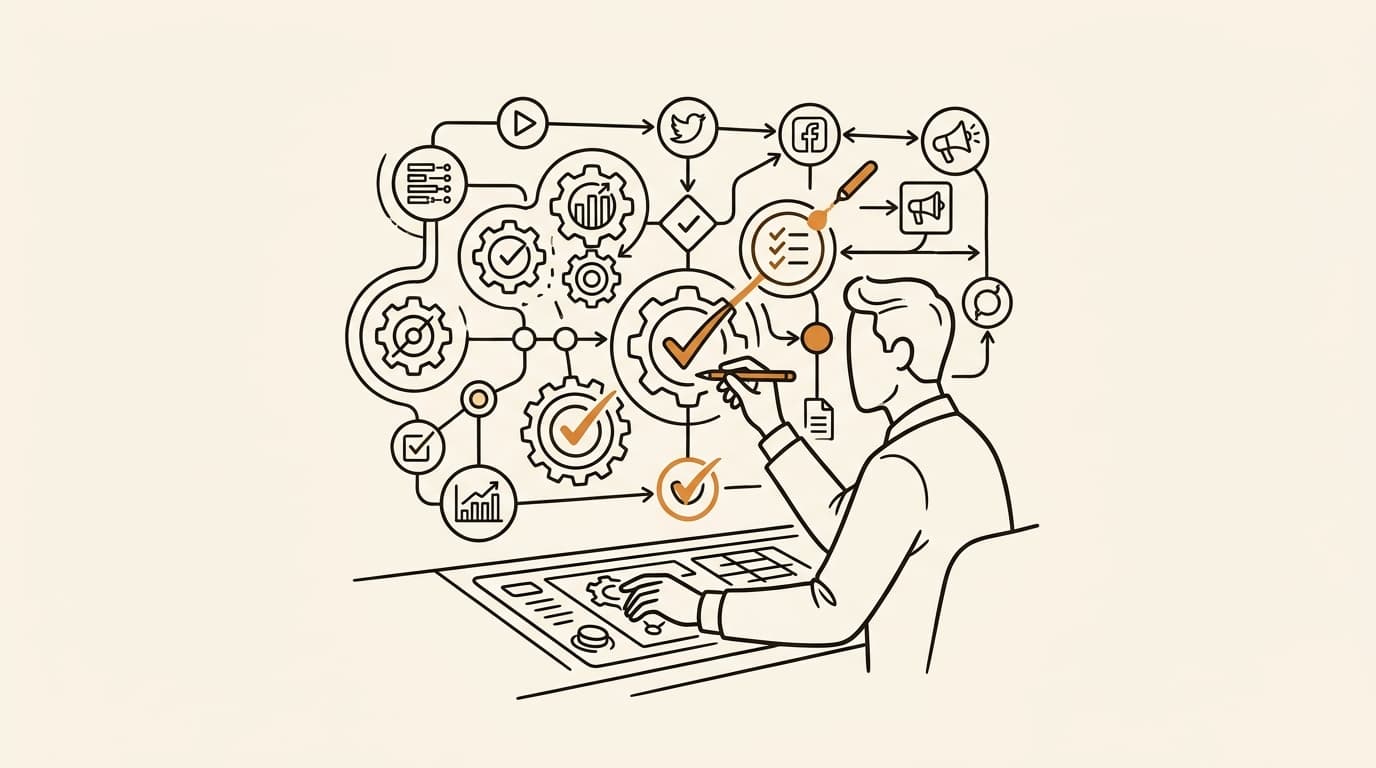
Well, most AI workflow audits I see start too broad.
They try to map the whole marketing operation: planning, briefs, media, creative, reporting, approvals, client communication, finance, and whatever else happens in the week. The output looks serious. It is usually too vague to change anything.
From my experience, a useful workflow audit starts with one repeated workflow and asks a few uncomfortable questions.
I learned this the slow way in agency work. The process document can look perfect, while the real handoff is still happening in a Slack thread, a client comment, or someone's memory.
The template
Use this for one workflow first.
-
Workflow name What is the repeated task?
-
Trigger What starts the work?
-
Current owner Who is responsible today?
-
Inputs What information has to be available before work can start?
-
Output What gets produced?
-
Decision or handoff Who uses the output, and what do they decide or do next?
-
Pain Where does the work slow down, break, or become political?
-
AI boundary Which part could AI help with, and which part still needs human judgment?
-
Risk What could go wrong if the AI output is wrong, incomplete, or too confident?
-
Pilot candidate Is this worth testing in the next 30 days?
Weak version
Workflow: Reporting Pain: Takes too long AI opportunity: Automate reports Risk: Accuracy
This is not useless, but it is not reviewable. Another person cannot tell what "reporting" means, which report matters, who reads it, or why the team should trust the automation.
Stronger version
Workflow: Monday paid search variance note for the retail client Trigger: Monday 9am after weekend spend and conversion data land in Looker Owner: Performance manager Output: One-page note explaining spend, CPA, conversion rate, and recommended budget action Decision: Account lead decides whether to shift budget before Wednesday pacing call Pain: Current note takes 90 minutes and often misses the reason behind the movement AI boundary: AI can draft variance explanations from structured data and prior campaign context; human still approves final recommendation Risk: A wrong recommendation could move budget away from a working campaign Pilot candidate: Yes, if the first version is read-only and manually approved
This version can be reviewed. It names a workflow, a person, a rhythm, and a risk.
Where generic AI often fails
If you paste the weak version into ChatGPT or Claude, it will probably produce a polished audit. That polish can be dangerous. The model may make the workflow sound more mature than it is.
Prova reviews the artifact against a fixed standard. It asks whether the workflow is specific, whether the handoff is real, whether the AI boundary is honest, and whether the next sprint should move forward or stop for foundation work.
That is the point of the Operator path.
The audit is not there to admire your process. It is there to tell you where the work is actually ready.
If you had to audit only one workflow this week, which one would create the most relief if it became clearer?