Latest field note
/Operator
AI Marketing For Travel Brands Balancing Inspiration And Accuracy
How travel marketers use AI for destination content and campaigns while keeping pricing, availability, and local details accurate.
Prova Blog
No generic AI content. These posts start from real artifacts, operating failures, course material, and the work Prova asks marketers to submit for review.
Latest field note
How travel marketers use AI for destination content and campaigns while keeping pricing, availability, and local details accurate.
Start here
Operator, Leader, and Builder posts show different first moves, but each route ends in reviewable proof.
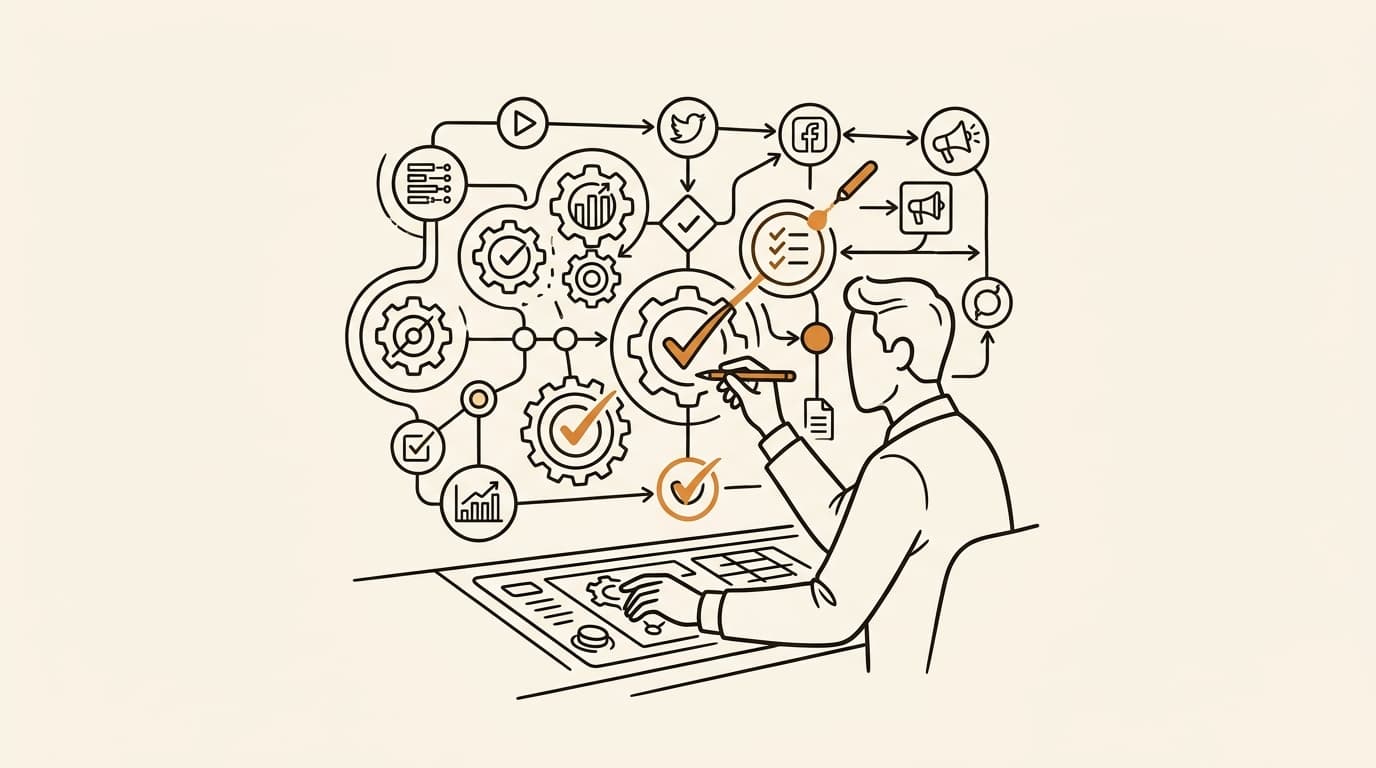
A practical way to audit one marketing workflow before deciding whether AI should touch it, automate it, or leave it alone.

Measure AI ROI in marketing with time reclaimed, output quality delta, and cost per qualified output.

A practical AI builder path for marketers moving from prompt use to small systems, reviewed artifacts, and real product judgment.

Proof-based learning requires you to produce a real artifact — a tool, a workflow, a report — and have it reviewed against specific criteria.
Toolkits
These pieces are useful when you need a brief, checklist, scorecard, memo, or operating rhythm you can actually submit for review.

An AI talent development framework builds validation depth first, then cross-discipline fluency, then a specialized AI-native role over 18 months.
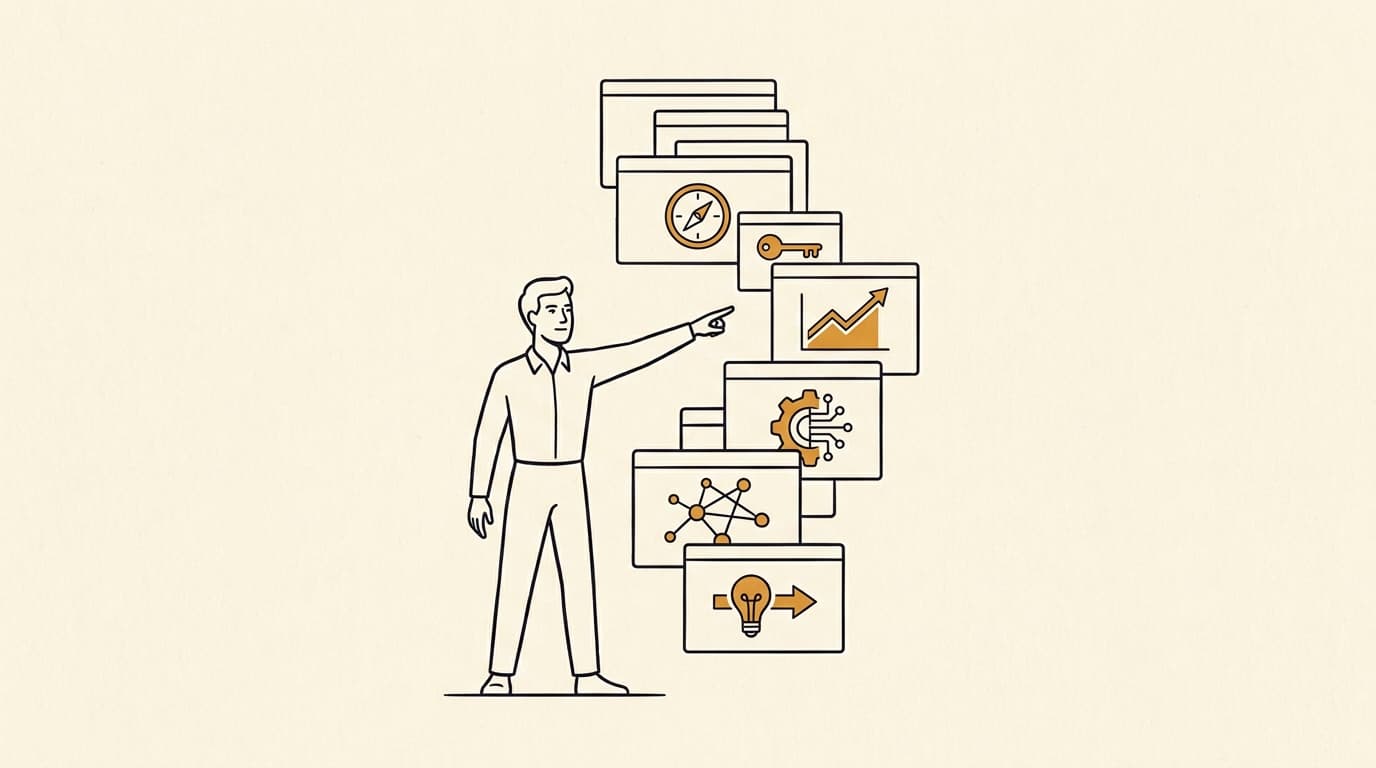
An AI board presentation template gives senior leadership ten slides: the problem, the value, a 90-day pilot, metrics, cost, risks, and one specific ask.
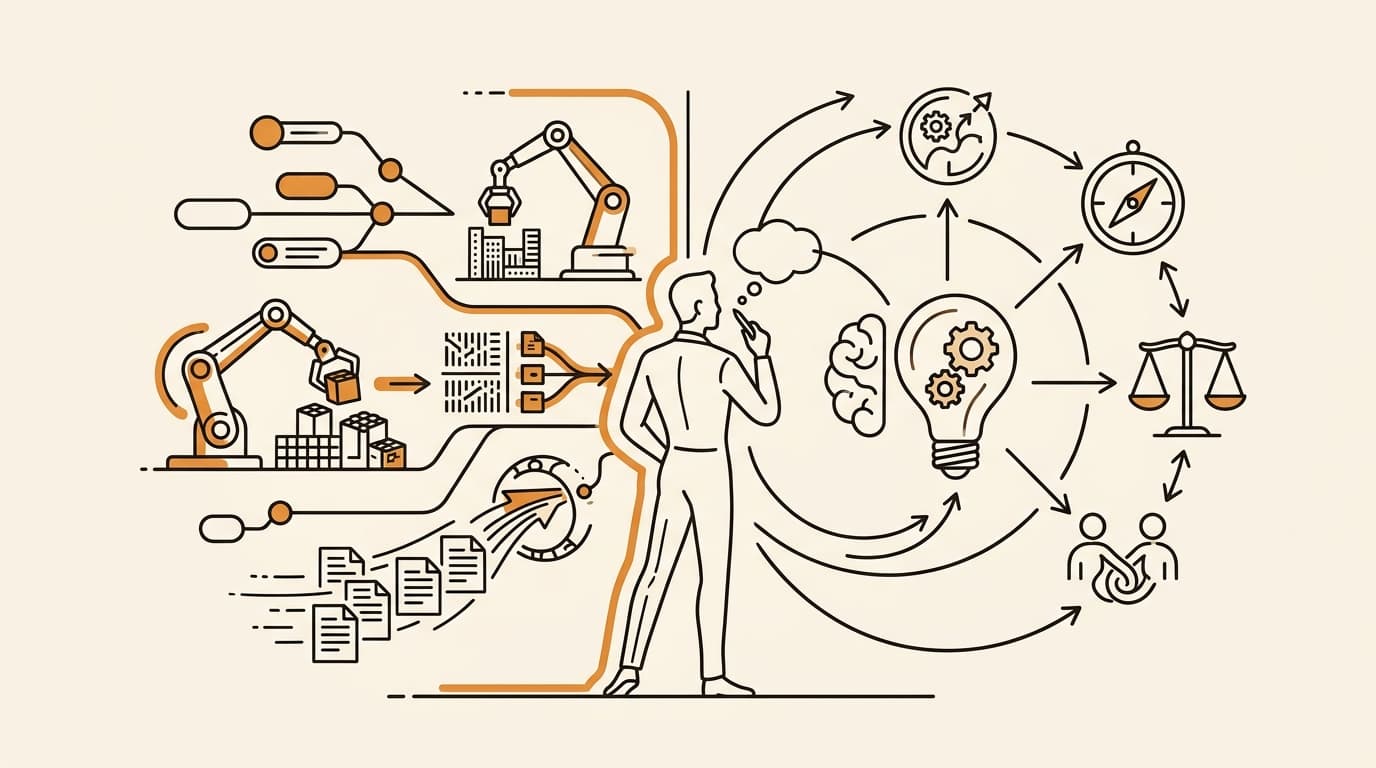
An AI delegate guide splits work by judgment versus execution: the team gets modules with named deliverables, the leader keeps only the calls that need them.
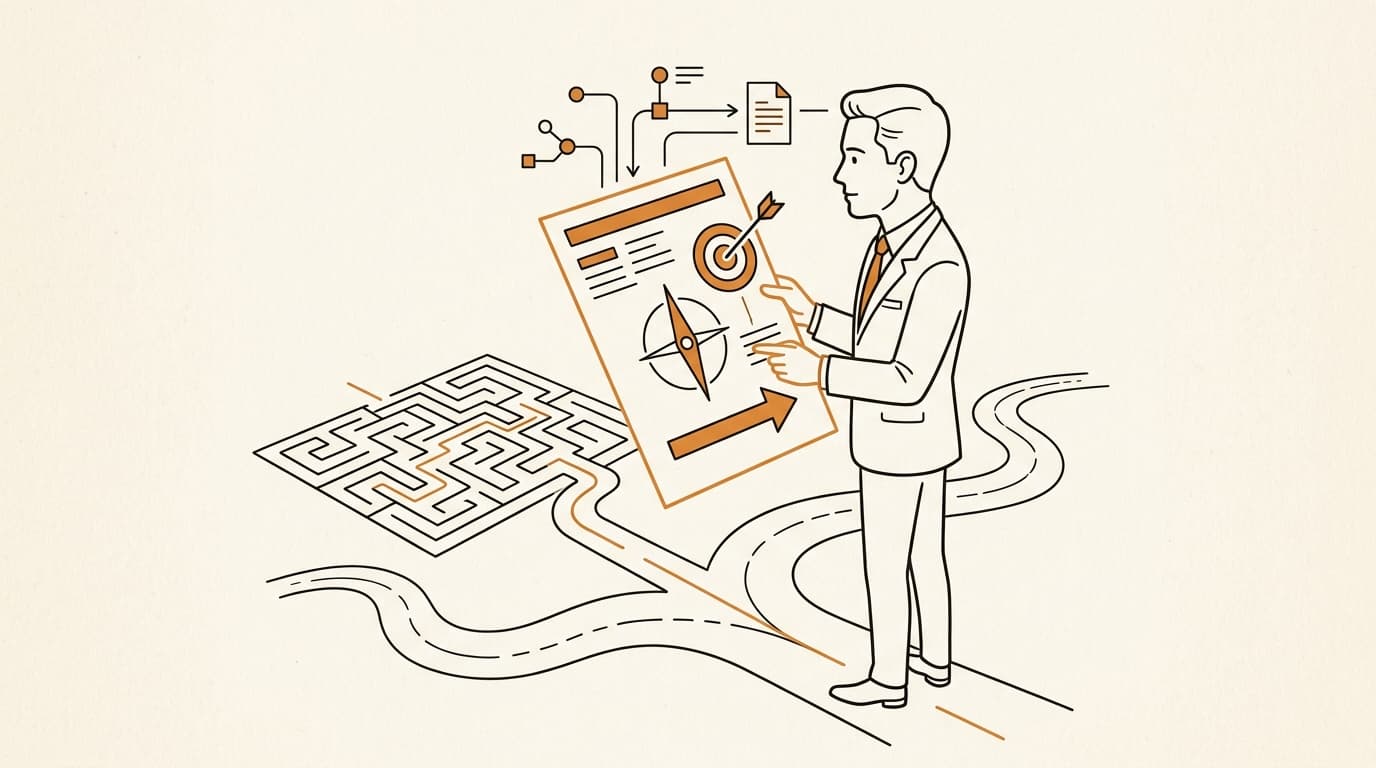
An AI executive brief gives a senior leader the headline, key concepts, three questions to ask, and the decision it informs — all on one page.
Recent notes
Shorter essays on judgment, proof, measurement, and the places generic AI advice usually misses across Operator, Leader, and Builder work.
63 posts
How manufacturing marketers use AI for technical content and lead generation without over-simplifying complex products.
How education marketing teams use AI for student recruitment content while keeping programme facts accurate and current.
How professional services firms use AI for thought leadership and proposals without diluting the expertise clients pay for.
How healthcare marketing teams use AI for patient-facing and clinician content while protecting accuracy and trust.
How fintech marketing teams use AI when every claim is reviewed, and where automation crosses a regulatory line.
Where AI marketing genuinely helps ecommerce teams with product copy and campaigns, and where scale starts to erode brand.
How B2B SaaS marketing teams use AI for measurement and attribution without trusting fabricated numbers in a long sales cycle.
How to build a reusable AI competitive teardown workflow that turns scattered competitor notes into a consistent product marketing artefact.
How channel marketers build partner enablement assets with AI while protecting the claims and co-brand rules partners depend on.
How field marketers use AI to personalise post-event follow-up at scale without sending the same generic note to every attendee.
How growth marketers use AI to generate creative variants for testing, and why the statistical verdict still belongs to the experiment.
A source-first AI market research workflow for product marketers: where the tool accelerates synthesis and where it invents confidence.
How brand managers use AI to cluster social listening mentions and draft responses, while keeping escalation judgement human.
Where AI helps CRM marketers with lifecycle email sequencing and copy, and where a human still owns the tone and trigger logic.
A workflow for SEO managers to generate briefs with AI, then apply the editorial judgement that keeps briefs from becoming thin templates.
How performance marketers use AI for paid media reporting without hallucinated metrics: retrieval first, narration second.
A concrete AI content workflow for content marketers: where research, outlines, and edits belong, and which steps must stay human.
An AI ROI estimation worksheet turns current time and cost baselines into a defensible business case, reported under a conservative scenario.
An AI data infrastructure audit checks media, operations, finance, and talent data for queryability and labeling before you spend on AI tools.
Prova and ChatGPT do different jobs for marketers. ChatGPT is a general assistant; Prova is a sprint-and-review program. Here is where each one fits.
An AI pilot measurement template names the metric, baseline, target, guardrail, and owner before the pilot starts, so the result can be defended.
An AI use case prioritization matrix scores candidate ideas on impact and feasibility so a marketing team can choose one pilot to run this quarter.
A repeatable AEO content checklist for pages you want AI answer engines to extract and cite, plus the steps to apply it to any draft.
SEO, AEO, and GEO overlap but optimize different things: ranked links, quotable answers, and citation by generative engines. Here is the honest comparison.
Generative engine optimization is the work of becoming the source an AI engine retrieves, trusts, and quotes. Here is how that selection works.
A plain-language definition of answer engine optimization, how it differs from SEO, and what marketers can do about it.
In 2026, marketing hiring managers are asking three questions: Can you show me something you built?
An AI insight summary system needs labelled data, business context, and a human review step before it can support marketing decisions.
A first useful slice is the smallest version of an AI tool that produces real value for a real user.
Prova works best for marketers willing to choose an Operator, Leader, or Builder path and produce a real artifact for review.
Marketing agencies can build AI services by treating each repeatable client deliverable as a workflow and building an AI tool for each one.
An AI keyword-to-brief pipeline turns a keyword list into search intent, content structure, and ready-to-assign briefs.
AI governance in marketing needs three gates: copy review, data privacy review, and brand standards approval before anything goes live.
An AI tool recommendation brief needs the problem, workflow change, risks, cost, build-or-buy rationale, and success metric.
You can automate CRM segmentation refreshes, lifecycle email sequencing, and churn risk scoring with AI.
A small-team AI content ops system needs three parts: a brief generator, a draft reviewer, and a distribution scheduler.
AI can automate paid media reporting by pulling structured data from ad platforms and generating plain-English performance summaries.
In a Prova sprint, you choose one path, produce a real artifact, submit evidence, and revise until the work is useful enough to build on.
The most common way AI workflows fail in marketing is inconsistent input data with no human output review before it ships.
A consistent AI prompt has four components: a fixed role definition, a bounded task description, a required output format, and explicit constraints.
Choose the Operator Path for workflows, the Leader Path for AI pilot decisions, or the Builder Path for a working slice your team can use.
Marketing directors don't need to build AI tools themselves.
A 90-day AI pilot needs workflow selection, baseline measurement, controlled rollout, and a final team decision.
An AI sprint is a time-boxed work unit with a defined input, a specific AI-assisted process, and a reviewable artifact as the output.
Most marketing teams default to buying AI tools or prompting ChatGPT directly.
You can build a functional AI tool for your marketing team using no-code platforms and structured prompting patterns — no developer required.
A prompt is a single instruction to an AI.
Most marketers in 2026 don't need to learn to code. They need to learn to build. Here's the honest difference — and what's actually worth your time.
An AI builder is someone who uses AI tools to create functional software or workflows without being a software engineer.
A practical AI competitive intelligence workflow for marketing teams that need better questions, sources, synthesis, and action.
A practical AI vendor evaluation scorecard for marketing teams comparing tools, pilots, risk, workflow fit, and support burden.
A practical worksheet for redesigning marketing team roles around AI without pretending every role should simply become more automated.
A practical AI launch readiness checklist for marketing teams that need to test ownership, data, review, risk, and rollout before go-live.
A practical way to turn AI experiments into a marketing operating system with owners, rhythms, review points, and evidence.
A practical path for marketers who want to move from using AI tools to building useful workflows, pilots, and internal systems.
A practical AI readiness scorecard for marketing teams that need to know what is safe to pilot and what still needs operating work.
A reality check for marketers who want to build AI products or internal tools without ignoring cost, compliance, QA, recovery, and users.
A 90-day AI rollout plan for marketing teams that need ownership, measurement, review rhythm, and a pilot that can survive real work.
Why marketing AI pilots need a measurement architecture before teams can make credible claims about value, risk, and adoption.
Why one-off AI feedback can make a workflow audit sound better while still missing the operating details that decide whether it can run.
A practical way for marketers to move beyond prompts and define one visible AI-assisted slice a real user can test.
A practical reporting operating system for marketing teams using AI without losing audience judgment, cadence, and accountability.
AI courses can teach the system, but marketers still need a way to submit real work, receive review, and move through a sequence.