/Proof
What Generic AI Review Misses In Workflow Audits
Why one-off AI feedback can make a workflow audit sound better while still missing the operating details that decide whether it can run.
Short answer
Generic AI review often improves the wording of a workflow audit while missing ownership, handoffs, risk, and measurement details that decide whether the workflow can run.
If you paste a workflow audit into ChatGPT, Claude, or Gemini, you will probably get useful feedback.
I do not want to pretend otherwise. These tools are very good at making a messy draft clearer. They can spot missing sections, rewrite vague language, and suggest next steps.
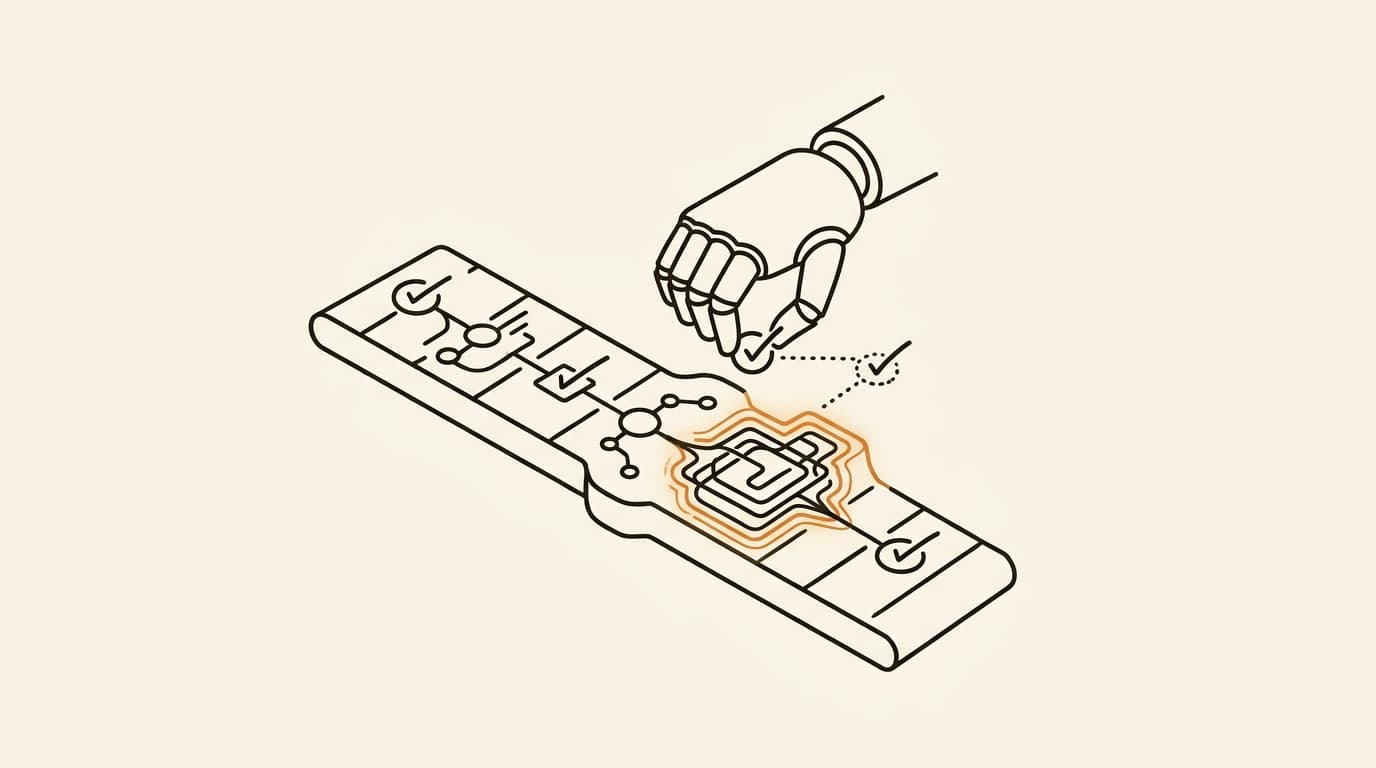
However, one-off review has a quiet weakness: it often improves the document without testing whether the workflow can run.
I use this kind of review all the time. The trap is that a cleaner sentence can make me feel braver than the artifact deserves.
The model may reward polish
A weak workflow audit can sound mature after one rewrite.
Before:
Reporting takes too long. AI can help summarize performance.
After generic review:
The reporting workflow presents an opportunity to reduce manual analysis time by applying AI-assisted summarization to campaign performance data.
That sentence is cleaner. It is not necessarily better.
It still does not say which report, which data, which owner, which decision, or what happens if the summary is wrong.
The missing operating questions
For a workflow audit, I care about questions like:
- What starts the work?
- Who owns it today?
- Who uses the output?
- What decision changes because of the output?
- Which part is safe for AI?
- Which part still needs judgment?
- What failure would damage trust?
If those are missing, the audit is not ready.
What Prova is trying to add
Prova does not win because it has a better model than the tools you already use. That would be a silly claim.
It has to win by being a better system around the model.
The review is tied to a sprint. The sprint is tied to a roadmap. The result becomes product state. The next step changes depending on the evidence in the submission.
That means a workflow audit can pass, revise, or expose a foundation gap. It is not just rewritten into something nicer.
The practical difference
Generic AI asks:
How can I improve this document?
Prova should ask:
Is this artifact strong enough to move the user to the next sprint?
That is a much stricter question.
I still use generic AI constantly. But when the goal is progress through a sequence, the container matters. Otherwise we end up with better words and the same operating problem.
When you ask AI to review your work, are you asking for better writing or a harder decision?
Cheers, Chandler