/Proof
How To Become An AI Builder As A Marketer
A practical path for marketers who want to move from using AI tools to building useful workflows, pilots, and internal systems.
Short answer
Marketers become AI builders by choosing one real workflow, defining the first useful slice, and submitting artifacts for review instead of collecting more AI tips.
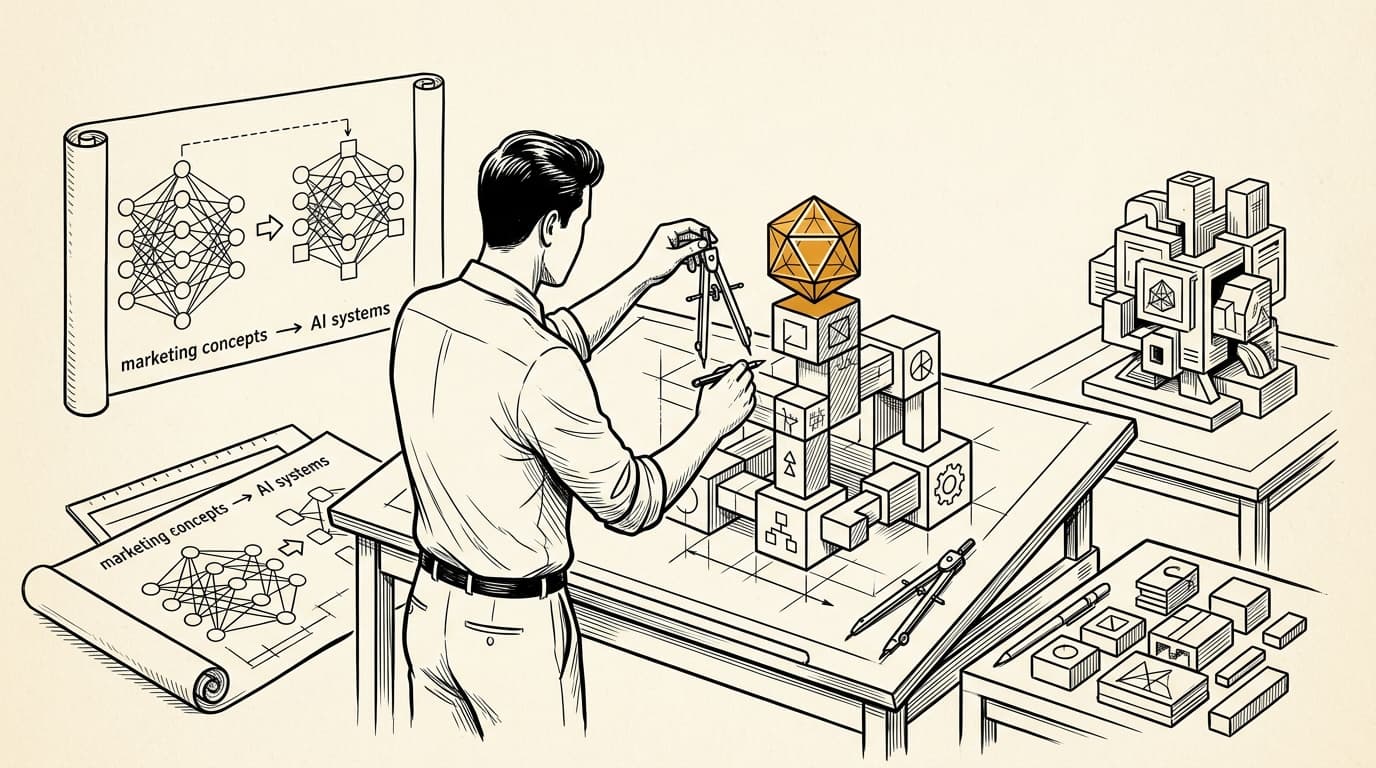
I spent most of my career in advertising before I learned to build software.
That sentence sounds neat now. It was not neat when I was in the middle of it. I did not wake up one morning with a clean plan and a new identity. I mostly had a pile of questions, a few half-working tools, and many error messages that made me feel like I had missed the class everyone else had attended.
Moving from Vietnam to Singapore and then to the US probably helped more than I realized at the time. I had already spent a lot of my career being the person translating between rooms that did not naturally understand each other.
From my experience, the hardest move for marketers is not learning another prompt trick. It is learning how to turn judgment into a small system someone else can use.
The first mistake is trying to become a developer
If you are a marketer, your unfair advantage is not that you suddenly know React, Python, Supabase, or model routing.
Your unfair advantage is that you understand the work.
You know where the campaign handoff breaks. You know which report looks impressive but does not change a decision. You know why a client says "AI" when the real issue is approval speed, messy data, unclear ownership, or fear of being wrong in front of leadership.
That context matters. However, context alone does not make you a builder.
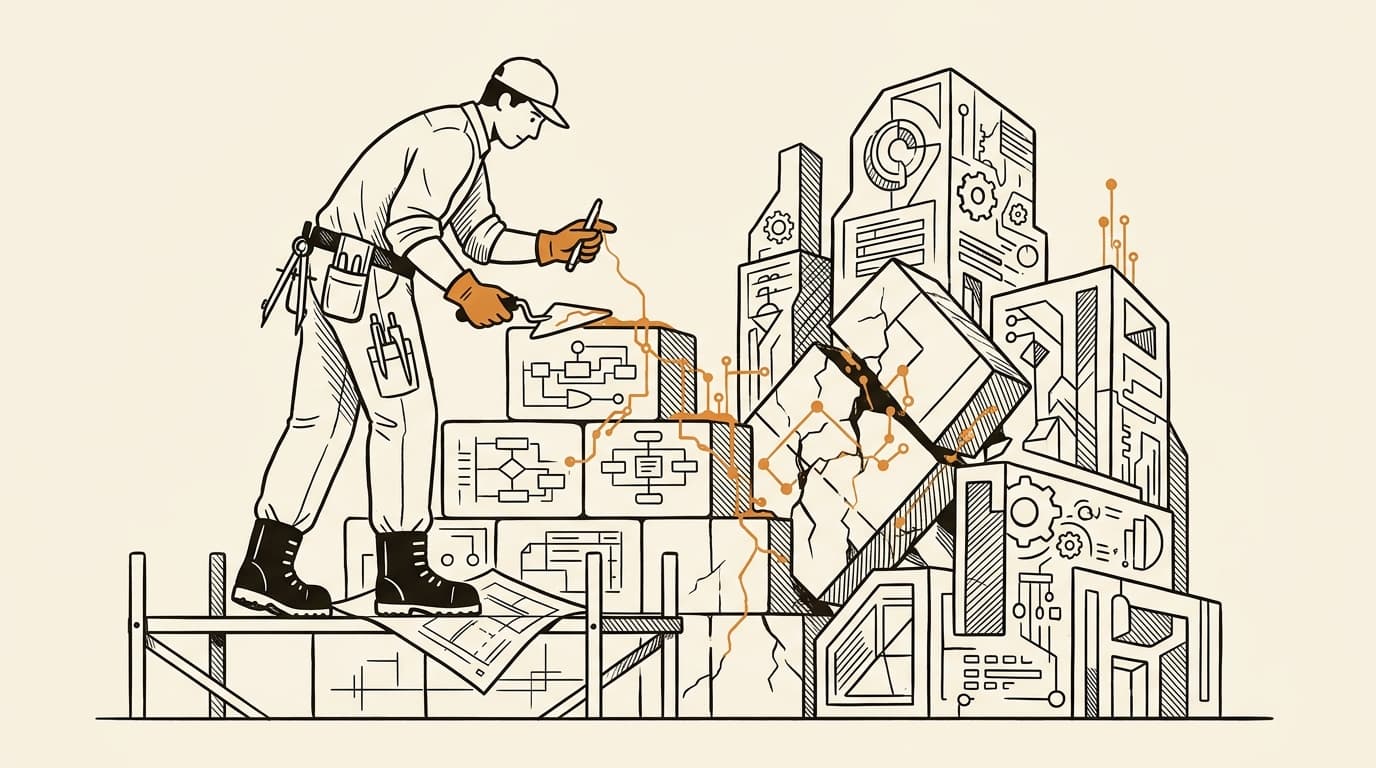
A builder has to produce something reviewable.
Start with one useful slice
The first useful slice is not a grand platform. It is usually much smaller:
- A workflow audit that names one repeated pain.
- A scorecard that separates ready work from risky work.
- A tiny internal tool that helps one person make one decision faster.
- A reporting rhythm that tells different stakeholders what they actually need.
The slice has to be specific enough that another person can test it.
Bad version:
We will use AI to improve client reporting.
Better version:
Every time a new client brief arrives, the strategy lead receives a launch-readiness checklist that names missing context, risky assumptions, and the decision needed before creative work starts.
That second version can be judged. It has a time, a user, an output, and a decision.
What Prova is trying to do
Prova is built around this idea: you do one piece of real work, submit it, get a structured review, and move to the next sprint.
That is different from asking ChatGPT, Claude, or Gemini for advice. Those tools are useful. I use them every day. But they do not naturally hold you to a sequence. They do not know whether your workflow audit is ready for measurement architecture, whether your build brief is too vague, or whether you should stop and fix the foundation first.
Prova is not magic. It is a stricter container.
The path I would recommend
If you are a marketer becoming an AI builder, I would start here:
- Pick one work problem, not one tool.
- Write the artifact before you build anything.
- Ask what would make the work unsafe, expensive, or embarrassing.
- Build the smallest visible slice.
- Get review before you make it bigger.
That last step is uncomfortable. It is also where the learning happens.
I might be wrong about the exact path for every person. Some people need more technical reps first. Some people need to unlearn vague strategy language first. But I am increasingly convinced that marketers do not become builders by consuming more AI content.
They become builders by producing reviewable work.
That is it from me for now. If you are trying to make this transition, what is the first useful slice you want to show someone real?
Cheers, Chandler