/Builder
AI Builder Path For Marketers
A practical AI builder path for marketers moving from prompt use to small systems, reviewed artifacts, and real product judgment.
Short answer
The AI builder path for marketers starts with one real workflow, one useful slice, a build brief, risk checks, review, and a repeatable path from artifact to shipped behavior.

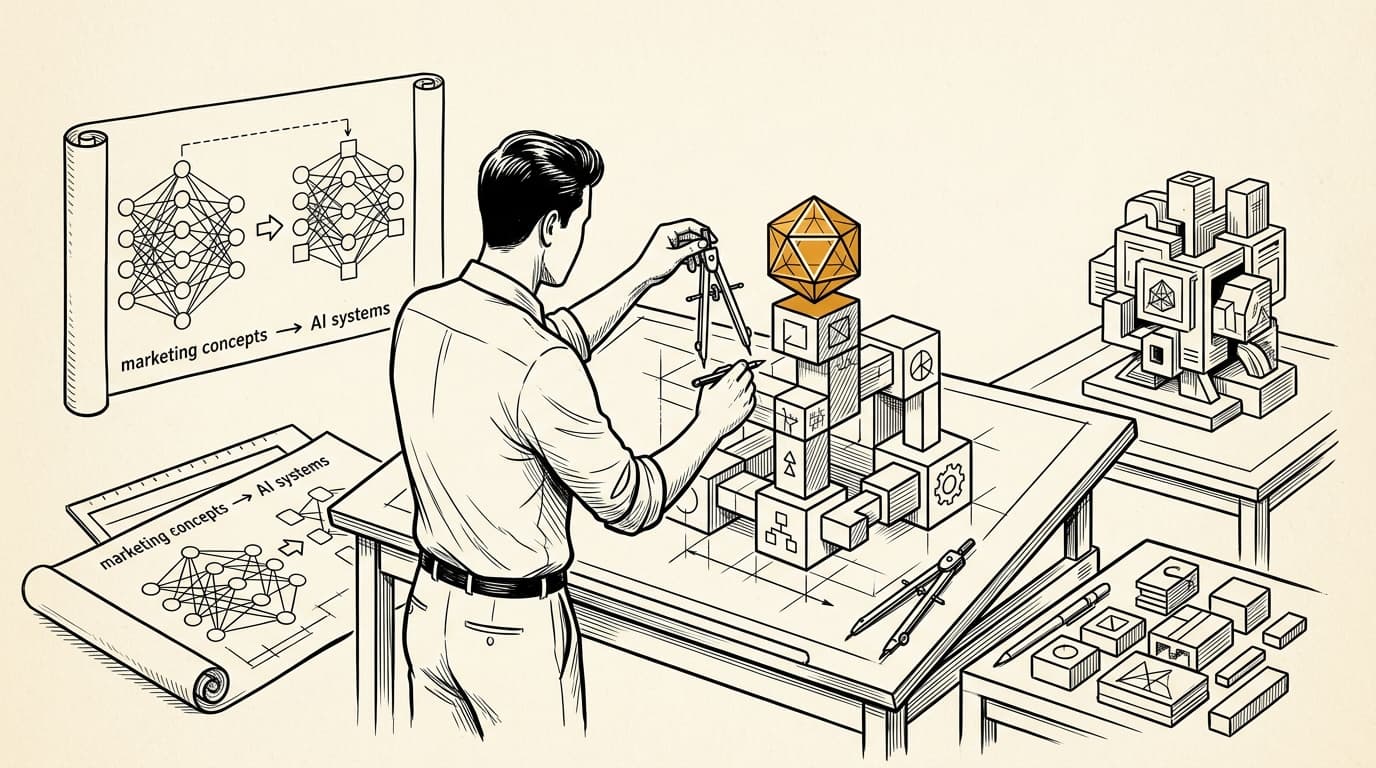
The AI builder path for marketers does not start with becoming a developer.
It starts with learning how to turn marketing judgment into a small system another person can use.
That distinction matters. A marketer can know many AI tools, write good prompts, and still never build anything that changes a workflow. I say this with sympathy because I have been there. A prompt can make you feel close to building. A working slice is less forgiving.
Step 1: choose one real workflow
The first move is not technical.
Choose one workflow where you already understand the pain:
- reporting takes too long
- creative briefs miss context
- competitor research is shallow
- client status updates hide the real decision
- campaign launch checks happen too late
The workflow should be frequent enough to matter and narrow enough to test.
Bad starting point:
I want to build an AI marketing assistant.
Better starting point:
I want one strategist to receive a brief-risk check before the creative team starts work.
The second version can be built, judged, and improved.
Step 2: define the first useful slice
A first useful slice is the smallest behavior a real user can test.
It is not a prototype that only works in your demo. It is also not a full product.
A useful slice has four parts:
- A user.
- A trigger.
- An output.
- A decision the output supports.
For example:
When a new campaign brief is pasted in, the tool returns missing context, risky assumptions, and the one decision the account lead should clarify before kickoff.
That is a slice. It does not solve marketing. It helps one person make one decision earlier.
Step 3: write the build brief before coding
The build brief is where marketers have an advantage.
You know the human context. You know why the handoff breaks. You know what the tool must not do. Put that into the brief before you open an editor.
A useful build brief should include:
- who the first user is
- what repeated job they need help with
- what the first version does
- what it explicitly does not do
- what data or input it needs
- what could go wrong
- what counts as "good enough to test"
This prevents the common AI-builder mistake: building whatever the model makes easy instead of what the workflow actually needs.
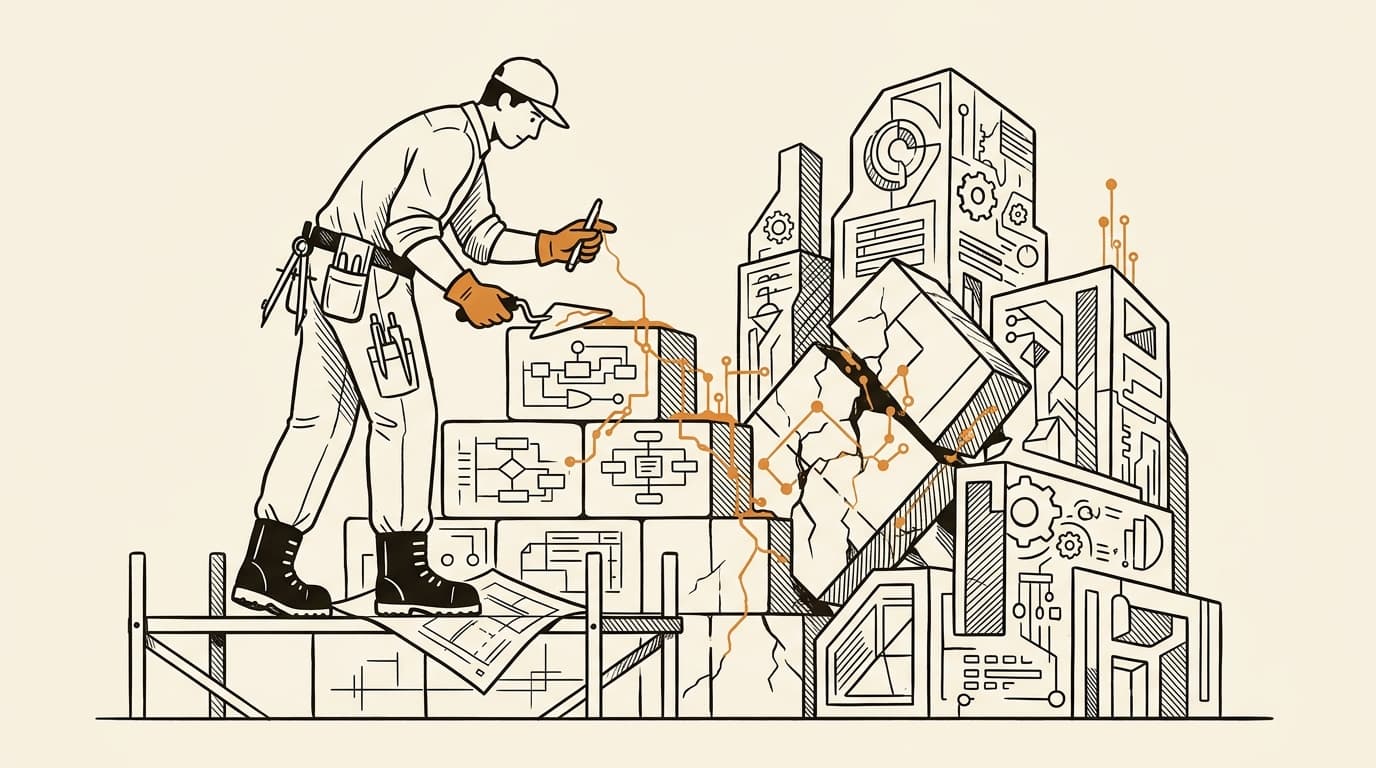
Step 4: check the uncomfortable parts
The builder path gets serious when you check the parts that demos avoid.
Ask:
- What happens if the model is wrong?
- What happens if the user provides messy input?
- What data should not enter the system?
- What cost grows if usage increases?
- Who fixes it when it breaks?
- What output still needs human approval?
This is not negativity. It is product judgment.
In Prova, the builder reality check exists because early AI products often look more mature than they are. The goal is not to slow you down. The goal is to keep the first shipped version honest.
Step 5: submit something reviewable
Marketers often want a more complete idea before showing it.
Builders learn faster by showing the right small artifact.
That artifact might be:
- a workflow audit
- a build brief
- a launch checklist
- a first interface
- a before-and-after example
- a test plan
The point is not to be impressive. The point is to make the work reviewable.
Generic AI can help you improve the wording. A review system should test whether the logic is strong enough to continue.
Step 6: make the next move smaller
The builder path is a sequence of smaller moves.
You do not go from "I have an idea" to "I have a product." You go from idea to brief, brief to slice, slice to test, test to review, review to revision, and then maybe to launch.
That sequence is slower than the fantasy. It is faster than wandering.
Where Prova fits
Prova tries to make this path explicit.
The builder path starts with a reality check, then asks you to write a build brief, submit evidence, and move through review before expanding. The product is intentionally narrower than a blank chat window.
ChatGPT, Claude, and Gemini are powerful. I use them constantly. But if the only container is a chat thread, it is easy to keep generating options instead of building a sequence.
Prova is trying to keep the sequence visible.
A simple builder path
If you want to start now, use this order:
- Name one workflow.
- Name one user.
- Write the first useful slice.
- Write the build brief.
- Check cost, privacy, failure, and review.
- Build only what the first user can test.
- Get review before expanding.
I might be wrong about the exact tool stack you should use. I am much more confident about the sequence.
If you are a marketer, your advantage is not that you know every framework. Your advantage is that you understand the work well enough to build the right small thing first.
That is it from me for now. If you were forced to build only one useful slice this month, which workflow would you choose?
Cheers, Chandler