/Proof
What Is An AI Sprint And How Is It Different From A Regular Project?
An AI sprint is a time-boxed work unit with a defined input, a specific AI-assisted process, and a reviewable artifact as the output.
Short answer
An AI sprint is a short, focused work cycle that starts with a defined task, uses AI as part of the process, and ends with a specific reviewable artifact — a tool, workflow document, report, or build output.
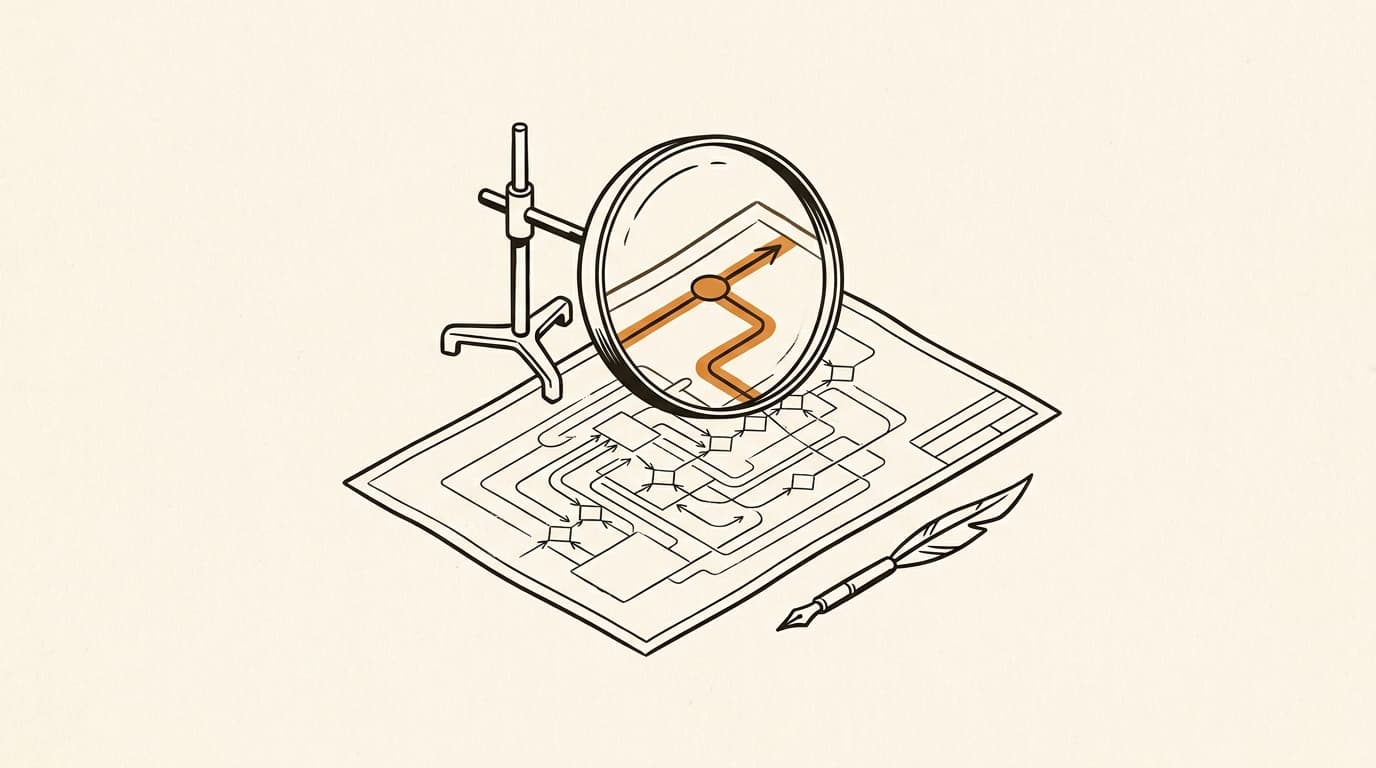
An AI sprint is a short, focused work cycle with three parts: a defined input, an AI-assisted process, and a reviewable artifact as the output.
That third part is what makes it different from most AI learning work. You do not complete an AI sprint by watching a video, passing a quiz, or generating a lot of interesting output. You complete it by producing a specific artifact — a built tool, a workflow document, an analysis report, a tested process — and having that artifact reviewed against criteria that existed before you started.
The sprint → artifact → review loop is the operating model behind Prova. Every sprint in the program works this way. I designed it this way because it is the only structure I have seen that reliably develops judgment, not just familiarity.
How is an AI sprint different from an agile sprint?
Agile sprints measure task completion. Did you close the tickets? Did the code merge? Did the story points get burned down?
AI sprints in the Prova sense measure artifact quality. Did the thing you built actually do what it was supposed to do? Does the workflow you documented actually capture the logic it was meant to capture? Is the analysis you produced actually correct and useful enough for someone to act on?
This is a different question. You can close every ticket in an agile sprint and still ship something that does not work. The agile framework mostly handles that with retrospectives and follow-on sprints. AI sprints as Prova uses them handle it differently: you do not advance to the next sprint until the artifact from the current one passes review. The review is the gate.
The other difference is scope. Agile sprints are typically two weeks of team work across multiple workstreams. An AI sprint in this context is a solo or small-team focused output, usually one to two weeks of work, scoped tightly enough that one person can own it end to end.
What does a marketing AI sprint produce?
It produces an artifact. Something with a file, a URL, a form someone can open, a document someone can read and critique.
A few examples of artifacts from Prova sprints:
| Sprint focus | Artifact |
|---|---|
| Workflow audit | A structured map of one marketing workflow with AI opportunity notes |
| Pilot decision package | A short leadership artifact that names the decision, metric, stakeholder risk, and next gate |
| Build brief | A specification document defining what a tool should do, what it should not do, and how to test it |
| Evidence review | A report comparing the actual run, pilot, or slice against the original brief |
Note what is not on the list. A list of ideas is not an artifact. A prompt you found that works well is not an artifact. A strategy deck explaining how AI could improve your marketing is not an artifact. These can be inputs to artifact work, but they are not the artifact themselves.
How long is a typical AI sprint?
One to two weeks of focused work. Not full-time — typically three to six hours of actual working time spread across the sprint window, plus asynchronous thinking between sessions.
That might sound short. The constraint is intentional. A tight time box forces you to scope narrowly. If you find yourself saying "I need more time," that is usually a sign the scope is too wide, not that the timeline is too short.
The other reason for the tight window: feedback delay kills learning. If you spend three months on something and then receive feedback, you have lost the context to use the feedback well. Two weeks keeps the work fresh enough that review feedback is immediately actionable.
What makes a good AI sprint artifact?
Three things:
It was tested by someone other than the person who built it. Self-testing is useful. It is not sufficient. Real tests reveal the gap between "this works with my examples" and "this works with real inputs from the actual workflow."
It has observable, specific behavior. "The tool summarizes campaign briefs" is not specific enough. "The tool reads a brief in format X, identifies the five standard quality criteria, and flags any that are missing or vague" is specific enough.
It can be evaluated against criteria that existed before the sprint started. This is the most important one. If the review criteria are invented after you submit, the review is just subjective feedback. If the review criteria were written into the sprint brief before you started, you knew what "good" looked like while you were building. That changes how you build.
What makes Prova's review different from reviewing your own work
The review criteria for every Prova sprint are written into the sprint specification before you start. You see them on day one. You know, in specific terms, what the reviewer will be looking for when you submit.
This matters because most self-learning breaks down at the review stage. You finish something, assess it yourself, decide it is good enough, and move on. The problem is that you are assessing it against the same assumptions you used when you built it. The blind spots you had at the start are still blind spots at the end.
External review against pre-specified criteria does two things your self-assessment cannot. It catches things your assumptions hid from you. And it gives you a clear record of what passed and what did not, so the next sprint can start from an honest baseline rather than a comfortable one.
That is the point of the sprint model. Not to make AI learning feel more rigorous. To make it actually produce the kind of judgment that transfers to real work.